
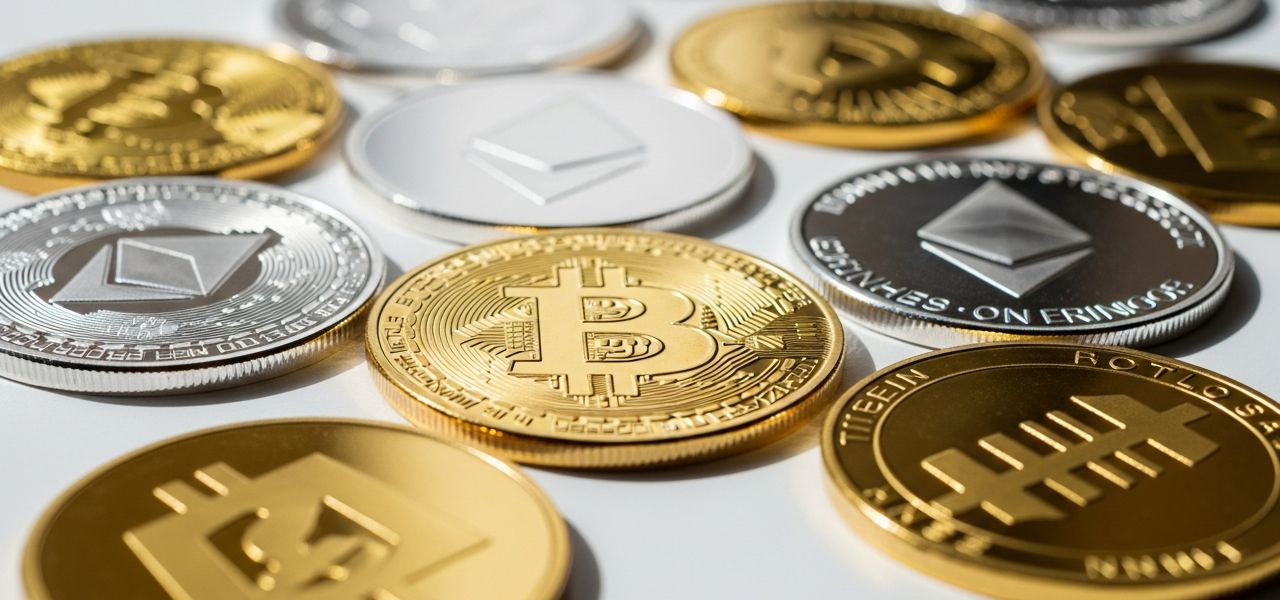
Types of cryptocurrencies
With over 17,000 different cryptocurrencies in existence today, the digital asset landscape has evolved far beyond Bitcoin’s original vision of peer-to-peer electronic cash. Understanding the various types of cryptocurrencies is crucial for investors, traders, and users who want to navigate this complex ecosystem effectively and make informed decisions based on their specific needs and risk tolerance.
From Bitcoin’s foundational store of value concept to specialized privacy coins and meme-driven tokens, each cryptocurrency category serves distinct purposes and offers unique advantages. This comprehensive guide explores the main cryptocurrency classifications, examining their core functions, popular examples, and practical applications to help you understand which digital assets align with your investment goals or use cases.
What Are Cryptocurrencies?
Cryptocurrencies are digital assets built on blockchain technology that enable decentralized transactions without the need for traditional financial intermediaries like banks or payment processors. These digital currencies use cryptographic techniques to secure transactions, control the creation of new units, and verify the transfer of assets across distributed networks.
Unlike traditional fiat currencies controlled by central banks, cryptocurrencies operate on decentralized networks maintained by communities of users and validators. This fundamental difference provides several advantages including faster cross-border transactions, lower fees for international transfers, enhanced security through cryptographic protection, and 24/7 availability without banking hour restrictions.
The decentralized nature of cryptocurrencies also offers users greater financial sovereignty and privacy compared to traditional banking systems, though the level of privacy varies significantly between different types of digital assets.
History and Evolution
The cryptocurrency ecosystem has undergone remarkable transformation since its inception, with each major milestone introducing new possibilities and use cases for digital assets.
- Bitcoin Launch (2009): Satoshi Nakamoto introduced Bitcoin as the first successful cryptocurrency, establishing the foundation for peer-to-peer digital money and blockchain technology.
- Altcoin Emergence (2011-2013): Early alternatives like Litecoin and Ripple emerged, offering faster transaction speeds and different consensus mechanisms than Bitcoin.
- Ethereum Revolution (2015): Vitalik Buterin launched Ethereum, introducing smart contracts and programmable blockchain functionality that enabled decentralized applications.
- ICO Boom (2017-2018): Initial Coin Offerings proliferated, creating thousands of new tokens and utility coins, though many projects failed during the subsequent market correction.
- DeFi and NFT Expansion (2020-2021): Decentralized finance protocols and non-fungible tokens gained mainstream adoption, creating entirely new cryptocurrency categories and use cases.
- Institutional Adoption (2022-Present): Major corporations and governments began integrating cryptocurrencies, leading to Bitcoin ETF approvals and central bank digital currency development.
Why Classify Crypto Types?
Understanding cryptocurrency classifications helps investors and users make informed decisions by matching digital assets to their specific needs, whether seeking stable value storage, privacy protection, or exposure to emerging technologies. Each cryptocurrency type carries different risk profiles, regulatory considerations, and potential returns.
Proper classification also enables better portfolio diversification strategies and helps users understand the underlying technology and use cases that drive value for different digital assets. This knowledge is essential for both short-term trading decisions and long-term investment planning in the rapidly evolving crypto market.
Payment Cryptocurrencies
Payment cryptocurrencies represent the original vision of digital money, designed primarily to store and transfer value efficiently. These coins focus on serving as alternatives to traditional fiat currencies, offering faster settlement times and lower transaction fees, especially for cross-border payments.
Bitcoin remains the most prominent example, serving as both a store of value and payment method, though its network congestion and higher fees have led to the development of other payment-focused cryptocurrencies like Litecoin and Bitcoin Cash. These alternatives typically offer faster block times and lower transaction costs while maintaining the core principles of decentralized digital money.
Top Payment Coins
The following table compares leading payment cryptocurrencies based on their launch dates, key technological features, and market positions as established digital payment solutions.
| Coin | Launch Year | Key Feature | Market Cap Rank |
|---|---|---|---|
| Bitcoin (BTC) | 2009 | First cryptocurrency, digital gold | #1 |
| Litecoin (LTC) | 2011 | Faster blocks, lower fees | #15 |
| Bitcoin Cash (BCH) | 2017 | Larger blocks, more transactions | #20 |
| Dash (DASH) | 2014 | InstantSend, privacy features | #75 |
| Monero (XMR) | 2014 | Private transactions, untraceable | #35 |
Stablecoins
Stablecoins are cryptocurrencies designed to maintain stable value by pegging their price to external references like fiat currencies, commodities, or baskets of assets. These digital assets combine the efficiency and programmability of cryptocurrencies with the stability of traditional financial instruments.
The stability mechanism varies by type, with fiat-collateralized stablecoins backed by traditional currency reserves, crypto-collateralized versions using digital asset reserves, and algorithmic stablecoins employing smart contracts to maintain price stability through supply adjustments.
- Price Stability: Maintain consistent value relative to their pegged assets, reducing volatility concerns for users and merchants
- Fast Settlements: Enable rapid transfers and payments without the multi-day delays typical of traditional banking systems
- Programmable Money: Support smart contract integration for automated payments, lending, and other financial applications
- Global Accessibility: Provide access to dollar-denominated assets for users in countries with unstable local currencies
- DeFi Integration: Serve as foundational assets for decentralized finance protocols, yield farming, and liquidity provision
- Regulatory Compliance: Often structured to meet traditional financial regulations while maintaining blockchain benefits
Types of Stablecoins
Different stablecoin models offer varying approaches to maintaining price stability, each with distinct advantages and trust requirements for users and investors.
| Type | Backing | Examples | Pros |
|---|---|---|---|
| Fiat-Collateralized | Traditional currency reserves | USDT, USDC, BUSD | Simple mechanism, high stability |
| Crypto-Collateralized | Cryptocurrency reserves | DAI, sUSD | Decentralized, transparent |
| Algorithmic | Smart contract mechanisms | FRAX, LUSD | No collateral needed, scalable |
| Commodity-Backed | Gold, oil, or other assets | PAXG, XAUT | Asset diversification, inflation hedge |
Use Cases
Stablecoins excel in cross-border remittances where users can avoid traditional banking delays and high transfer fees while providing recipients with stable value that doesn’t fluctuate wildly. This makes them particularly valuable for workers sending money to family members in different countries or businesses making international payments.
In cryptocurrency trading, stablecoins serve as crucial base pairs that allow traders to quickly move between volatile assets and stable value without exiting the crypto ecosystem entirely. They also enable sophisticated DeFi strategies like yield farming and liquidity provision while minimizing exposure to price volatility.
Infrastructure and Platform Cryptocurrencies
Infrastructure and platform cryptocurrencies power blockchain networks that support decentralized applications (dApps), smart contracts, and other blockchain-based services. These tokens serve as the fuel for their respective ecosystems, paying for transaction fees, computational resources, and network security.
Ethereum pioneered this category by introducing programmable smart contracts, enabling developers to build complex applications on its blockchain. This innovation sparked the creation of thousands of dApps ranging from decentralized finance protocols to gaming platforms and NFT marketplaces.
Newer platforms like Solana, Avalanche, and Polygon have emerged to address Ethereum’s scalability limitations, offering higher transaction throughput and lower fees while maintaining smart contract functionality. These networks compete on factors like transaction speed, cost efficiency, developer tools, and ecosystem adoption.
Key Platforms Comparison
The blockchain platform landscape features diverse approaches to scalability, consensus mechanisms, and developer experience, with each network optimizing for different use cases and performance requirements.
| Coin | TPS | Consensus | Examples dApps |
|---|---|---|---|
| Ethereum (ETH) | 15 | Proof of Stake | Uniswap, OpenSea, Compound |
| Solana (SOL) | 3,000 | Proof of History | Serum, Magic Eden, Raydium |
| Avalanche (AVAX) | 4,500 | Avalanche Consensus | Trader Joe, Pangolin, Aave |
| Cardano (ADA) | 250 | Ouroboros PoS | SundaeSwap, Minswap, CNFT |
| Polygon (MATIC) | 7,000 | Proof of Stake | QuickSwap, Decentraland, Aave |
| Binance Smart Chain (BNB) | 100 | Proof of Staked Authority | PancakeSwap, Venus, BakerySwap |
Memecoins and Entertainment Tokens
Memecoins represent cryptocurrencies that gained popularity through internet memes, social media trends, and community-driven hype rather than fundamental technological innovation or specific utility. These tokens often feature dog breeds, popular internet culture references, or viral jokes as their branding foundation.
While memecoins typically lack substantial technical features or real-world applications, they have demonstrated remarkable market influence through community enthusiasm and celebrity endorsements. The success of Dogecoin, originally created as a joke in 2013, paved the way for numerous similar projects that rely primarily on social momentum and speculative trading.
- High Volatility Risk: Extreme price swings based on social media trends and celebrity endorsements rather than fundamental value
- Community-Driven Value: Success depends heavily on maintaining active, engaged communities across social platforms
- Limited Utility: Most memecoins offer minimal practical applications beyond speculation and entertainment
- Viral Marketing Potential: Can achieve rapid mainstream awareness through meme culture and social media amplification
- Low Entry Barriers: Often available at very low prices, making them accessible to retail investors with small budgets
- Pump and Dump Susceptibility: Vulnerable to manipulation schemes and coordinated buying/selling activities
- Celebrity Influence: Prices can surge or crash based on social media posts from influential figures
Popular Memecoins
The memecoin landscape includes established projects with significant market presence alongside newer tokens attempting to capture viral attention and community adoption.
| Coin | Origin | Market Influence | Risk Level |
|---|---|---|---|
| Dogecoin (DOGE) | Shiba Inu meme | High – Elon Musk support | Medium |
| Shiba Inu (SHIB) | Dogecoin competitor | High – Retail favorite | Very High |
| Pepe (PEPE) | Pepe the Frog meme | Medium – 2023 viral surge | Extreme |
| Floki Inu (FLOKI) | Elon Musk’s dog name | Low – Niche community | Very High |
| SafeMoon (SAFEMOON) | Reflection tokenomics | Low – Declined significantly | Extreme |
Risks and Rewards
Memecoin investments carry extreme volatility risks, with prices capable of moving 100% or more in single trading sessions based solely on social media sentiment or celebrity endorsements. This volatility can create substantial gains for early adopters but also devastating losses for investors who buy during peak hype periods.
The community-driven nature of memecoins means their long-term success depends entirely on maintaining social media engagement and cultural relevance, factors that are inherently unpredictable and unsustainable. Smart investors approach memecoins with strict risk management, treating them as speculative entertainment rather than serious investment vehicles.
Privacy Coins
Privacy coins are cryptocurrencies specifically designed to provide anonymous transactions and protect user financial privacy. Unlike Bitcoin and most other cryptocurrencies where all transactions are publicly visible on the blockchain, privacy coins use advanced cryptographic techniques to hide transaction amounts, sender and receiver addresses, and other identifying information.
These digital assets serve users who prioritize financial privacy for legitimate reasons, including protection from authoritarian governments, corporate surveillance, or general preference for keeping personal financial information confidential. Popular privacy coins like Monero and Zcash employ different technical approaches to achieve transaction anonymity while maintaining blockchain security and decentralization.
Privacy Mechanisms
Privacy cryptocurrencies employ sophisticated cryptographic methods to obscure transaction details while maintaining the integrity and verifiability of the underlying blockchain network.
- Ring Signatures (Monero): Mix the user’s transaction with multiple decoy transactions, making it impossible to determine which is the actual spend while proving one valid transaction occurred within the group.
- Zero-Knowledge Proofs (Zcash): Use zk-SNARKs technology to prove transaction validity without revealing any information about the sender, receiver, or transaction amount to outside observers.
- Stealth Addresses: Generate unique, one-time addresses for each transaction that only the recipient can link to their wallet, preventing address reuse tracking and maintaining recipient privacy.
- Confidential Transactions: Encrypt transaction amounts using cryptographic commitments that allow network validation without revealing the actual values being transferred between parties.
- Coin Mixing Services: Combine multiple users’ transactions through mixing protocols that break the link between input and output addresses, obscuring transaction histories and fund flows.
Utility, Security, and DeFi Tokens
This diverse category encompasses cryptocurrencies that serve specific functional purposes within blockchain ecosystems, provide ownership rights in traditional assets, or facilitate decentralized financial services. These tokens represent the intersection of traditional finance and blockchain innovation.
Utility tokens grant access to specific products or services within blockchain platforms, while security tokens represent ownership stakes in real-world assets like company equity, real estate, or commodities. DeFi tokens power decentralized financial protocols that replicate traditional banking services without intermediaries.
The regulatory landscape for these tokens varies significantly, with utility tokens generally facing fewer restrictions than security tokens, which must comply with traditional securities laws in most jurisdictions. This regulatory distinction significantly impacts how projects structure their token offerings and ongoing operations.
| Type | Purpose | Examples | Regulation Notes |
|---|---|---|---|
| Utility Tokens | Access platform services | BNB, LINK, UNI | Generally less regulated if purely functional |
| Security Tokens | Represent asset ownership | tZERO, Polymath, Harbor | Subject to securities laws and compliance |
| Governance Tokens | Protocol voting rights | COMP, AAVE, MKR | Regulatory status still evolving globally |
| Exchange Tokens | Trading fee discounts | BNB, FTT, KCS | Increasing scrutiny from regulators |
| Yield Farming Tokens | DeFi protocol rewards | CAKE, SUSHI, CRV | Complex tax implications for users |
| Lending Tokens | Decentralized lending | cTokens, aTokens | May face banking regulation challenges |
| Insurance Tokens | DeFi risk coverage | NXM, COVER, INSURE | Insurance regulators showing interest |
DeFi Token Examples
Decentralized finance tokens enable various innovative financial services through smart contracts and automated protocols, creating new opportunities for earning yield and participating in financial markets.
- Governance Participation: Token holders vote on protocol upgrades, parameter changes, and treasury management decisions in decentralized autonomous organizations
- Liquidity Mining Rewards: Users earn tokens by providing liquidity to decentralized exchanges and automated market makers like Uniswap and SushiSwap
- Yield Farming Opportunities: Stake tokens in various DeFi protocols to earn additional rewards through lending, borrowing, and providing liquidity services
- Protocol Revenue Sharing: Some DeFi tokens distribute a portion of protocol fees and revenue to token holders as passive income
- Cross-Protocol Integration: Many DeFi tokens work across multiple platforms, creating composable financial services and enhanced utility
- Automated Market Making: Tokens facilitate decentralized trading through algorithmic price discovery and automated liquidity provision mechanisms
Security Tokens vs Utility
Security tokens represent ownership stakes in real-world assets and must comply with traditional securities regulations, including investor accreditation requirements, disclosure obligations, and trading restrictions. These tokens offer institutional-grade compliance but with limited liquidity and higher regulatory overhead.
Utility tokens provide access to specific platform services or products and generally face fewer regulatory restrictions, though the distinction can be complex when tokens provide multiple functions or generate returns for holders. The regulatory classification often determines market access, trading venues, and investor eligibility requirements.
Other Emerging Types
The cryptocurrency ecosystem continues evolving with new token categories that serve specialized use cases and emerging market needs. NFT-related tokens enable fractional ownership of digital art and collectibles, while governance tokens give users voting rights in decentralized autonomous organizations.
Fan tokens allow sports teams and entertainment brands to engage with supporters through exclusive access and voting on team decisions. Carbon credit tokens digitize environmental assets, while gaming tokens power play-to-earn economies and virtual world ecosystems.
Historical Milestones Table
The evolution of cryptocurrency types reflects technological advancement and market maturation, with each innovation building upon previous developments to create new possibilities for digital asset applications.
| Year | Coin | Innovation | Notes |
|---|---|---|---|
| 2009 | Bitcoin | First cryptocurrency | Established blockchain technology foundation |
| 2011 | Litecoin | Faster payments | First major Bitcoin alternative |
| 2014 | Monero | Privacy features | Ring signatures for anonymity |
| 2015 | Ethereum | Smart contracts | Enabled programmable blockchain applications |
| 2018 | USD Coin | Regulated stablecoin | Institutional-grade stable value |
| 2020 | Uniswap | DeFi governance | Decentralized exchange token distribution |
| 2021 | Axie Infinity | Gaming tokens | Play-to-earn mechanics mainstream adoption |